Domenico Cimarosa: Il Matrimonio Segreto Stage and costume concept and design June 2015
Concept:
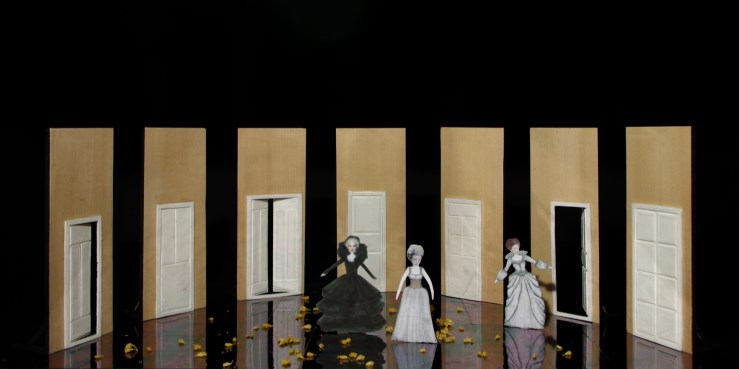
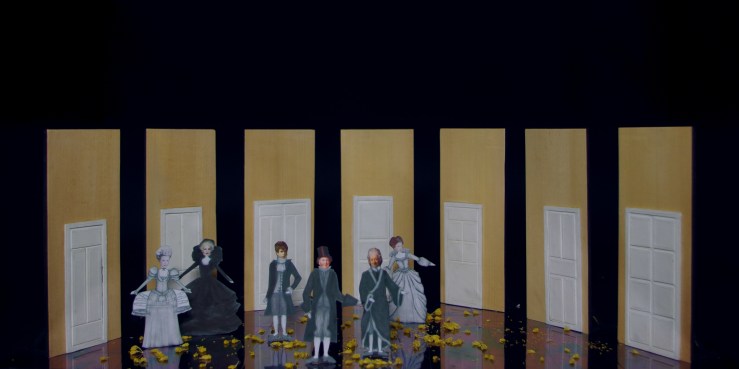
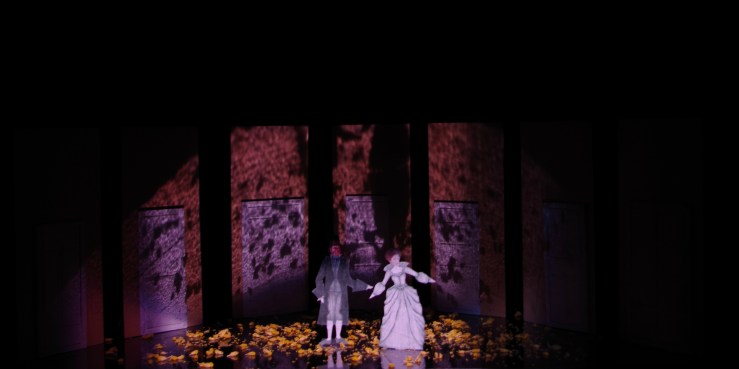
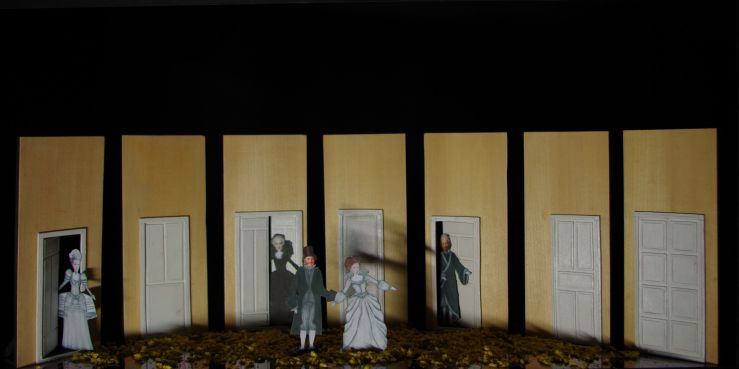
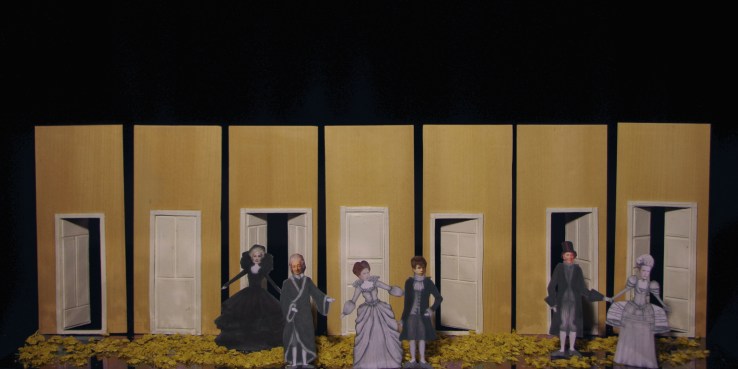
“Sala, che corrisponde a vari appartamenti” This statement, from the very beginning of the libretto, can be used as a guideline for the set design, but can also be used as a metaphor for the situation of the play. The situation allows multiple outcomes, and someone has to give up his own goal, in order to achieve the happy end of the opera. Until that happens, the situation, with all its secrecy and differing agendas, traps the implicated more and more as the opera progresses and each resistantly insist on achieving his own happiness.
The concept of my work with the opera is inspired by this interpretation as well as the thoughts of the Enlightenment. The designs of both stage and costumes are inspired by the period around 1780, but are mixed with modern materials and aesthetics, to create an overall timeless atmosphere released from any specific location.
It is my belief that we can better understand current structures in society by analysing past understandings of humanity and society. Even though the opera is originally set in 1780 the thematic of personal dreams vs. the guidelines of family, authorities, society and materialism are universal, and the conflicts described in this opera are still seen in today’s society. And still it is hardly ever possible to find a solution that will satisfy all, no matter how hard you try to orchestrate events to accomplish this. In order to break out of the role that society has placed you in, you have to search for new structures. This concept allows a modern interpretation of the opera by reflecting on the time in which it was written, and visualizing the Enlightenment in a timeless setting.
Costumes:
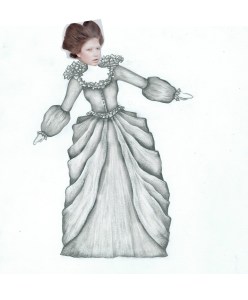
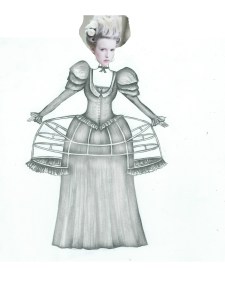
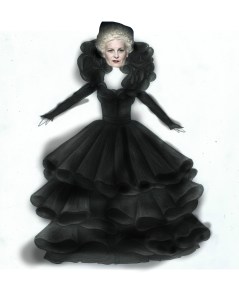
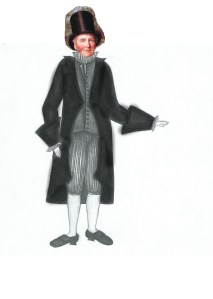
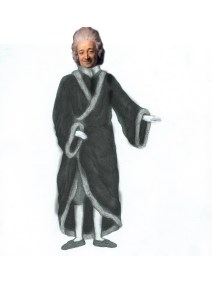
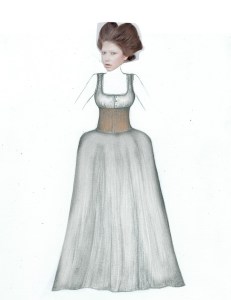
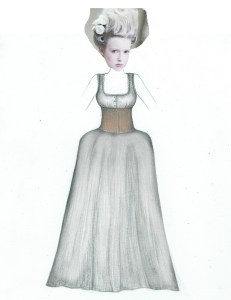
The costumes reflect the light and playful libretto and the music of Cimarosa, and should compliment the design of the stage. The colours are overall neutral, mainly in white, greys and black.
The costumes are created in an elegant and timeless look, drawing inspiration from the fashion of the time up until and around 1780. The shapes and patterns are drawn from the period, but the ideas are constantly being twisted and the boundaries of the designs are pushed by augmenting certain shapes, applying abstract textures and using modern techniques and materials, to avoid an old-fashioned look and instead create a playful, contemporary design, that reflect on the time in which the opera was written as well as todays fashion.


 Eva Laut Ebbesen