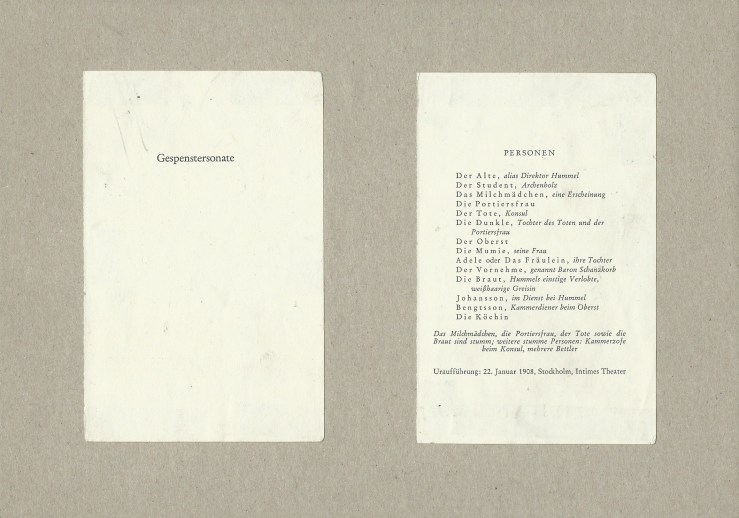
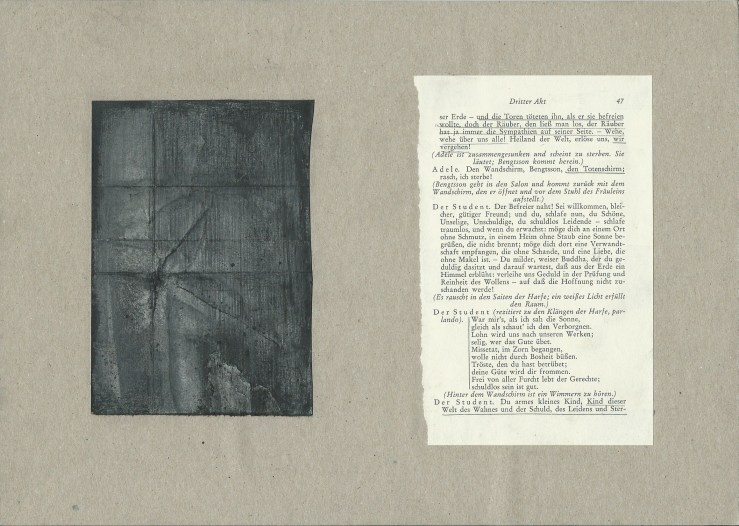
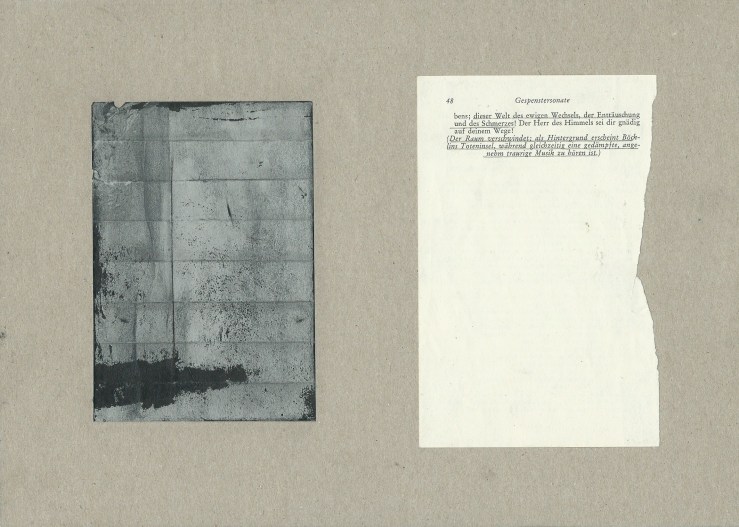
Gespenstersonaten (Ghost Sonatas) 15 tables (A4) of book pages (A6) and drawings (A6, pencil, ink and fine liner) Exhibited at the Open Days of the Academy of Fine Arts January 2013
Concept:
”Theater is an orchestral art form […]. What I seek, is a form of chamber music for the theater.”
With these words Max Rheinhardt opened the Kammerspiele of Deutsches Theater Berlin on the 8th of November 1906. The Kammerspiele was a smaller stage connected to the theater. Through its size it allowed the realization of a new form of theater. The goal was a repertoire of plays of a lesser scale, in which the plots should emphasize the internal rather than the external.
The strive against simplicity and stylization had already been addressed some 20 years earlier by August Strindberg in the preface to the play Miss Julie. Here he desires the following:
”[…] first and foremost a small stage and a small auditorium, then perhaps a new drama might emerge and the theater
might once again become a place for educated people.”
He developed the design of a Scandinavian test theater in Copenhagen, in which the new dramas with their concentrated plots and characters were to be performed. 15 years later, following the overcoming of naturalism, the thoughts and ideas of Strindberg were revived, and in November 1907 the Intimate Theater in Stockholm opened under the leadership of August Falck. During the following three years the theater performed exclusively the works of Strindberg.
Strindberg adopted the term ‘chamber play’ from Max Rheinhardt. In the text Memorandum to the Members of the Intimate Theater and Open letters to the Intimate Theater from 1908 and 1909 he describes the principles of staging and stage practice within the new dramatic form:
”The idea of chamber music, transferred to drama. The intimate method, the meaningful motif, the refined staging […]. In drama we seek the strong, highly significant motif, but with limitations. We try to avoid in the treatment all frivolity, all calculated effects, places for applause, star roles, solo numbers. No predetermined form is to limit the author, because the motif determines the form. Consequently: freedom in the treatment, which is limited only by the unity of the concept and the feeling for style.”
The Ghost Sonata came into being in February and March 1907. Like the new form of drama, this play as well refers to the classical music history. As examples: The Student is asked by The Old Man to go to the afternoon performance of the Valkyrie, The Old Man describes his life as a fairy tale book with fairy tales, and ”a single thread joins them together, and the same theme, the leitmotif, returns again and again, like clockwork”, Adele plays the harp, the rhythmical ticking of the wall clock, and the last stage directional note of Strindberg reads:
”The rooms disappears; Böcklin’s The Island of the Dead becomes the backdrop; soft, quiet, pleasantly melancholy music is heard from the island.”
On the 1st of April 1907 Strindberg writes about the title in a letter to Emil Scheering:
”It was a great and novel pleasure for me in my Easter suffering to find you so quickly taken by The Ghost Sonata (that is what it should be called, both after Beethoven’s Ghost Sonata in D minor and his Ghost Trio, not ‘Spook’ [‘Spook’] therefore).”
Beethoven’s Piano Sonata no. 17 in D minor, Op. 31 no. 2 is also known as The Tempest (Der Sturm) or The Ghost Sonata. The first movement is build after the principles of the sonata form – a principle that is inspired by the structure of the classic drama: Introduction of situation and characters, conflict and resolution (in the sonata form known as exposition, development and recapitulation + coda).
The exposition of the classic sonata contains a primary module in the tonic key, which presents the first melodic theme. Following a modulating transition the subordinate module and a second melodic theme is presented, often in the dominant key. The closing section of the exposition contains an epilogue and a closing statement, confirming the key of the subordinate module. After the repetition of the exposition the development begins. In the development the themes of the exposition are processed and continued through modulations and variations, until the theme of the primary module is repeated in the tonic key and the recapitulation begins. The theme of the subordinate module now appears in the tonic key as well and the tension between the two themes is dissolved. After a repetition of the epilogue and the closing statement a coda is brought as the ending of the sonata.
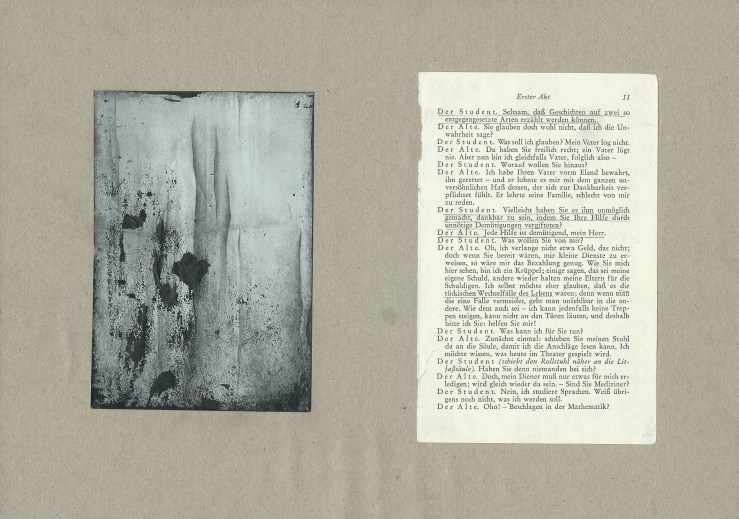
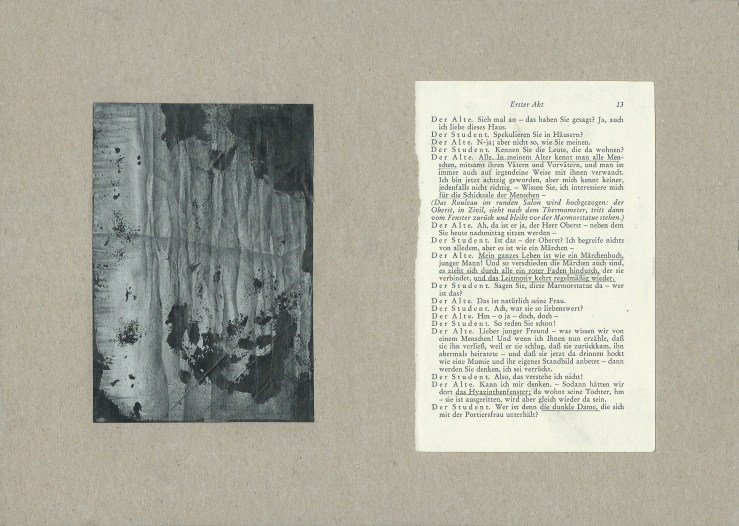
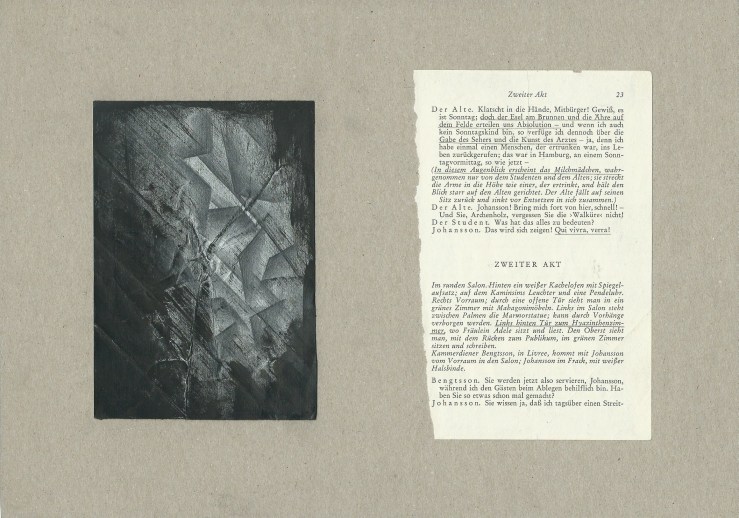
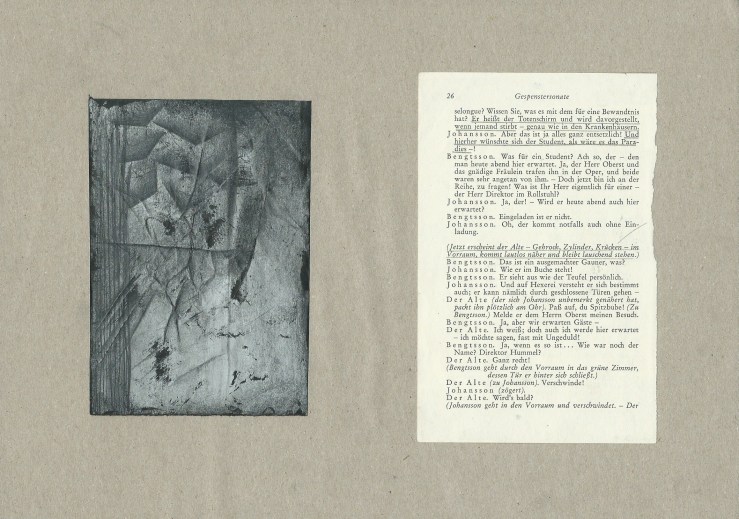
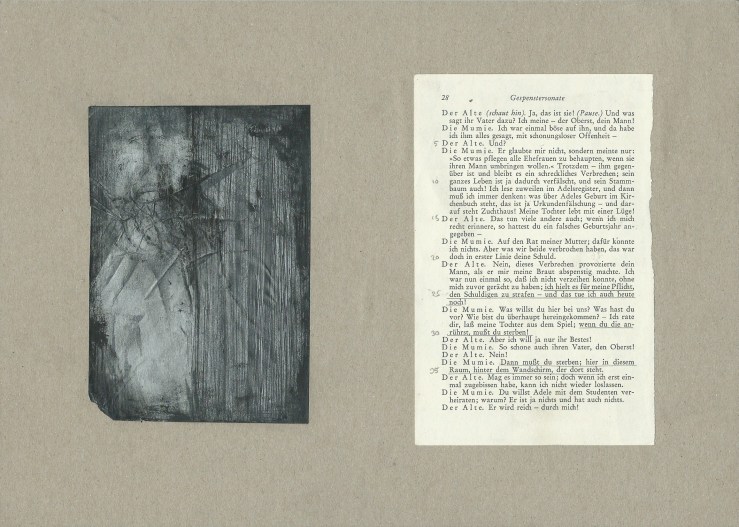
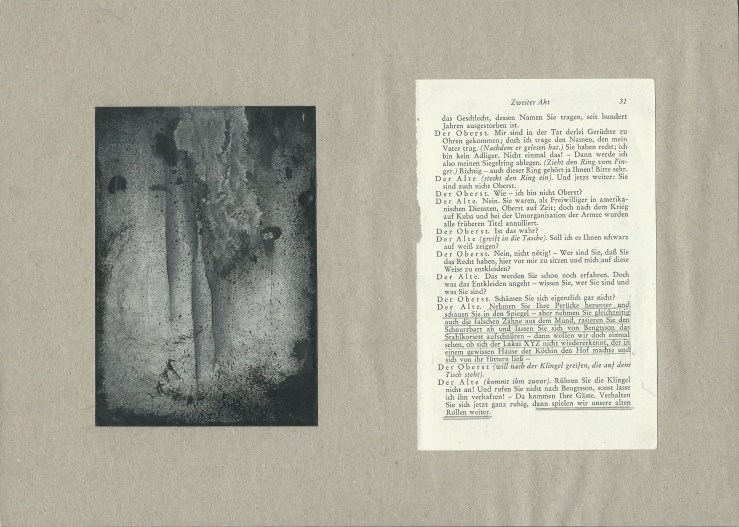
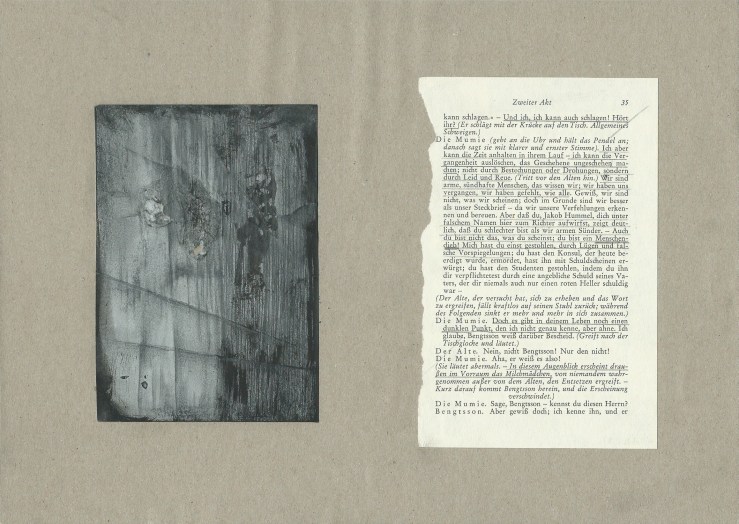
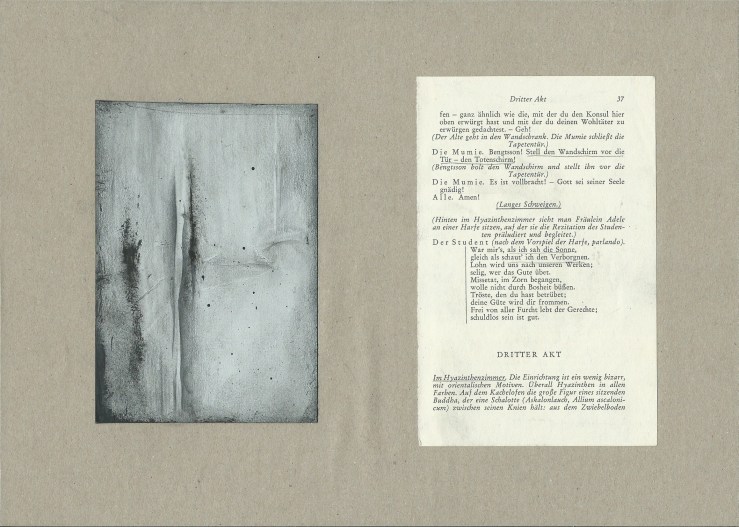
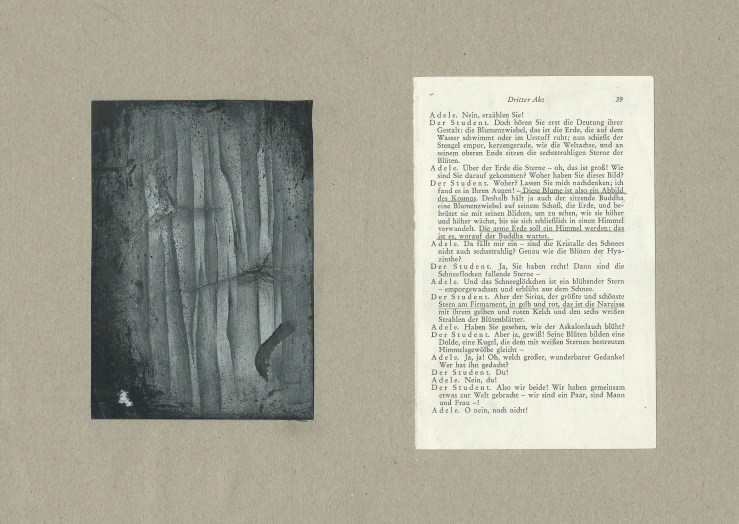
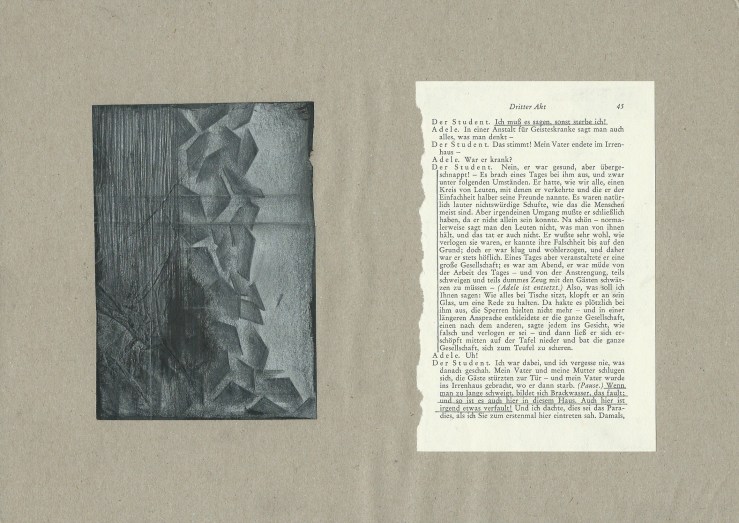
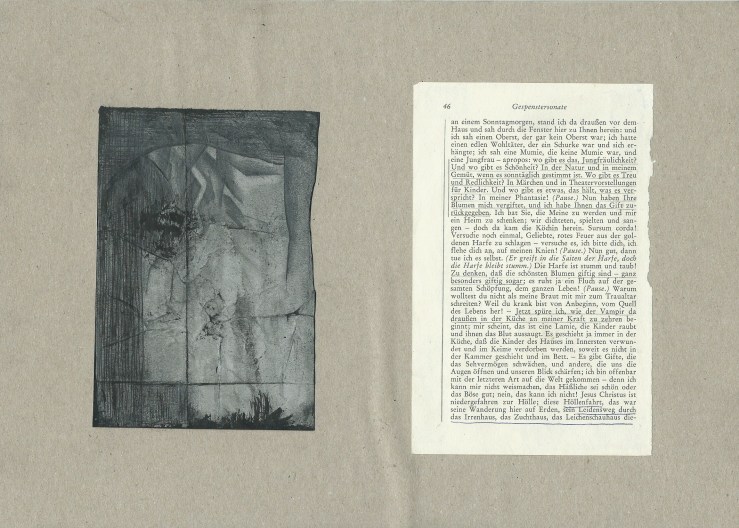
This work is based on a comparative analysis of the Ghost Sonatas by Strindberg and Beethoven as well as the visions of the chamber plays. The drawings are therefore not be understood as an illustration of the text, but much more as a study of the connection between music and theater. As such the drawings correspond with the themes and the atmosphere of Strindberg’s play, and at the same time follow the progression and characteristics of Beethoven’s Sonata: The primary module full of contrasts, the atypical subordinate module in minor, the tension-filled development, the pensive and hesitant recapitulation and the calm coda.
An attempt to create a connection between the thoughts of the musical chamber play and the theatrical sonata form.

 Eva Laut Ebbesen